


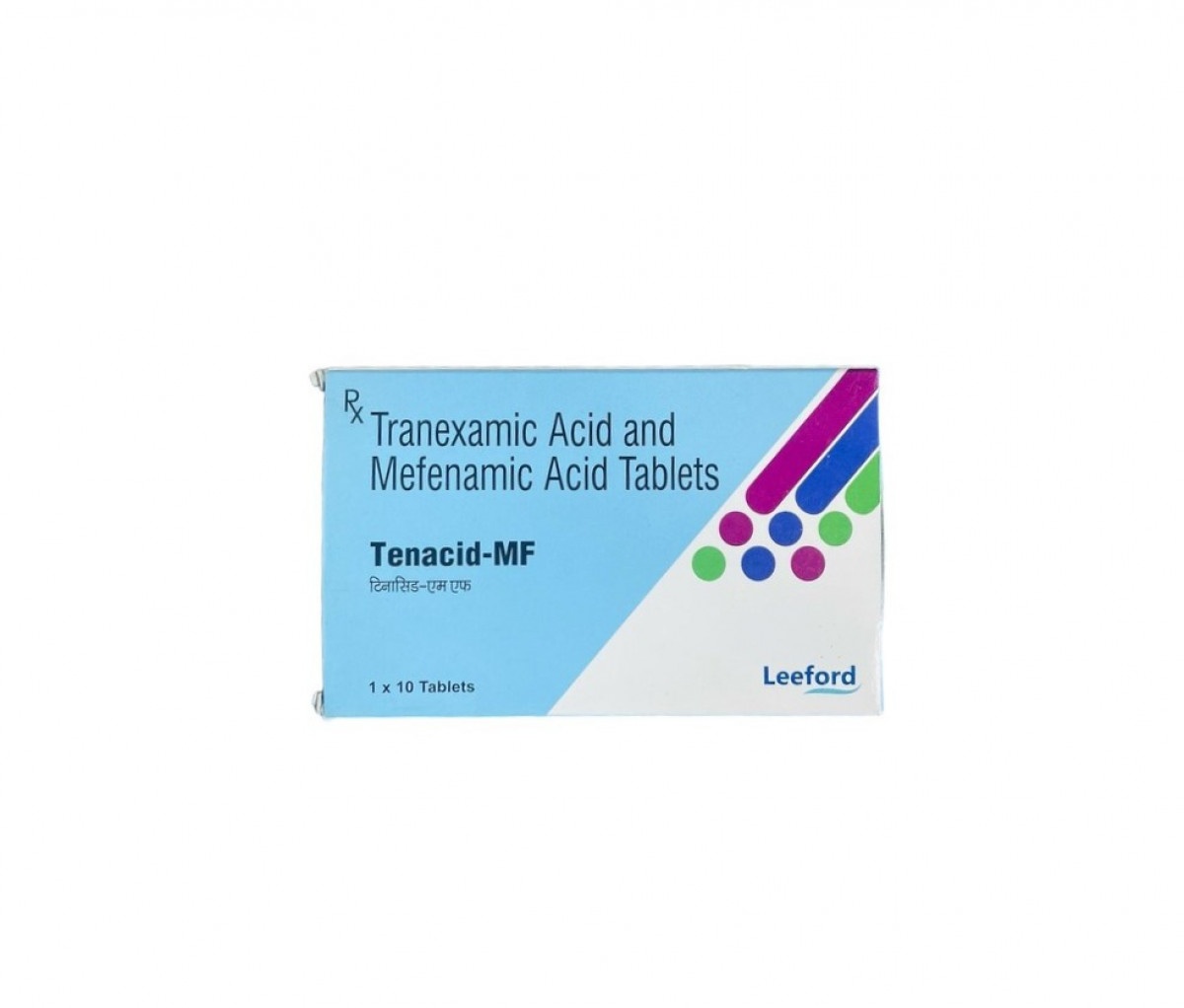
TENACID-MF TABLET
Manufactured By Leeford Healthcare
Composition Tranexamic Acid 500 mg & Mefenamic Acid 250 mg (Alu-Alu)
Rs 100.00
MRP Rs 200.00
(50% OFF)
Includes all taxes
Package SIZE
( 1x10 TABLETS )

100% Authentic
Products

Free
Shipping*

Products
Return Policy
Description:
Pregnancy interaction
- Not advised during pregnancy, particularly in the first and third trimesters.
- Mefenamic acid (an NSAID) can cause problems with the kidneys of the baby, the ductus arteriosus closing too soon, and problems later in the pregnancy.
- You should only use tranexamic acid if you really need to.
- Tell your doctor if you are pregnant, want to get pregnant, or are breastfeeding.
- Don't do it during the last few weeks of pregnancy unless your doctor tells you to.
FAQs for Medicine?
Q1. What does Tenacid-MF do?
It is used to stop heavy menstrual bleeding and relieve pain at the same time.
Q2. Can I use it if I have really bad period pain?
Yes. It is often given to women with heavy bleeding and uncomfortable periods.
Q3. How quickly does it work?
Within 30 to 45 minutes, pain alleviation begins.
Bleeding will start to go down in 2 to 3 hours.
Q4. Is it okay to take Tenacid-MF on an empty stomach?
No. To avoid stomach problems, always take it after eating.
Q5. Can I take it once a month?
Yes, but only during periods and only when a doctor says to.
Q6. Is it safe to use for a long time?
No. Long-term usage of NSAIDs might lead to acidity, renal problems, or stomach irritation.
Expert advice
- Take it with food to keep your stomach from getting upset.
- If you have renal difficulties, stomach ulcers, clotting abnormalities, or a history of stroke or DVT, don't use this.
- Don't drink alcohol because it makes gastric bleeding more likely.
- Not good for persons whose asthma is made worse by NSAIDs.
- If you see black stools, chest pain, swelling in your legs, or changes in your vision, stop and call right away.
- Do not take more than the recommended daily dose.
Side effects
- Feeling sick
- Throwing up
- Pain in the stomach
- Upset stomach
- Pain in the head
- Dizzy
- Weakness
- Not as common
- Acidic / Gastritis
- Diarrhea
- Feeling bloated
- Very serious (rare)
- Clots in the blood
- Bleeding heavily in the stomach
- Problems with vision
- Allergic response (rash, edema, trouble breathing)
- If you have serious symptoms, get medical attention right away.
How It Works
Tranexamic Acid:
- A drug that stops fibrinolysis.
- Stops blood clots from breaking down, which cuts down on too much bleeding.
Mefenamic Acid:
- An NSAID, or non-steroidal anti-inflammatory medicine.
- Helps with pain, swelling, and cramping in the uterus during periods.
- Action together:
- Stops bleeding and eases menstruation pain.
Medicine interaction
- Blood thinners like Warfarin and Heparin
- Other NSAIDs (Ibuprofen, Ketoprofen, Diclofenac)
- Oral contraceptive tablets (raise the risk of blood clots)
- Antidepressants (SSRIs)—might raise the risk of bleeding
- Diuretics (risk of kidney damage)
- Steroids make the stomach more irritated.
- Aspirin and clopidogrel are examples of antiplatelet medicines.
- Tell your doctor about all of the prescription, over-the-counter, and herbal drugs you take.
How to Use
- Take one pill two to three times a day, or as your doctor says.
- Always take it after meals.
- Do not chew or break; just swallow whole.
- Only use it for 2 to 5 days throughout your cycle.
- If you miss a dose, take it as soon as you can, unless it's almost time for the next one.
- Do not take twice as much.
Uses/Indications
- Heavy bleeding during periods (Menorrhagia)
- Dysmenorrhea: Painful periods
- Uterine bleeding with clots
- Bleeding with pain in the pelvis
- Bleeding from the uterus that works